Mathy extreme progressive metal with great melodies, crazy shifts, and killer technical proficiency!
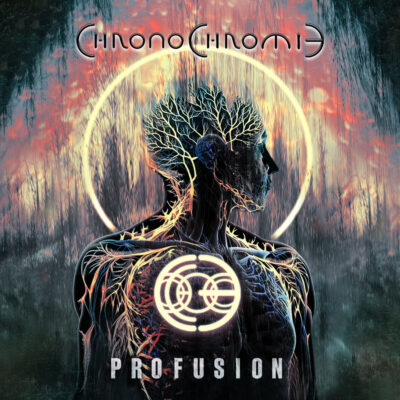
- Latency I
- Profusion
- Two Suns
- Asymptote
- Borrowed Time
- Neith
- Latency II
- LINE 752
- Fracture Code
- In the Twilight’s Embrace
Math rock/core/metal is one of those genre umbrellas that I admittedly have trouble getting into consistently. The nerd in me loves the wackiness and spastic nature of the music, particularly when very disparate time signatures eventually converge in interesting ways, but I find these genres oftentimes lack both melody and cohesive song structure, components I prefer in my metal regardless of how talented it is how from a technical standpoint. Even when done well and incorporating these elements, I rarely consider it “easy listening,” requiring more of my attention and focus to appreciate. But when it is done well, it can take you on a unique musical journey that is worth exploring.
Chronochromie hails from Montreal and takes on the name of a seven-movement orchestral opus from 1960 by Olivier Messiaen, which includes a movement totally dedicated to stringed instruments playing various birdsong, providing a glimpse into some of the uniqueness the band navigates in their music. I was first exposed to the band at Progstorm in August 2026 and was absolutely blown away by their performance. Band founder / primary composer Alexandre David is quite a talented musician / composer himself, working throughout the musical arts segment in Montreal, and he clearly likes technical complexity and variety. After a number of singles and an EP, Chronochromie just released their debut full length, “Profusion,” and it is quite the amalgam, a mix of spastic math metal and more melodic progressive metal, bleeding into progressive death/black in the rare moments featuring vocals, while also bringing in elements as wide-ranging as jazz, funk, post and djent. For every jilted polymetric passage that twists and turns in unpredictable fashion, there are complementary melodies and rhythmic convergence to give your ears a chance to recalibrate before being thrown into a new state of auditory vertigo. It is truly difficult to compare them to any single band, though if you threw Meshuggah, Car Bomb, The Dillinger Escape Plan, Dream Theater, and Extol into a blender, the result might taste something like Chronochromie. Musically the album biases instrumental, though 3 songs feature vocals and have a very different feel as a result. The instruments and arrangements are phenomenal and demonstrate insane technical proficiency, and rather than spending time here breaking this down further, I will just dive into the songs themselves.
“Latency I” kicks us off with some ambient ethereality, serving as the instrumental intro for what I consider Part 1 of this album. It segues perfectly into title track “Profusion,” going from dreamy to an aggressive, mathy, djenty assault on the senses. Extreme vocalist Patrick Goyette is hard hitting with his gnarly intelligible screams, contrasted with occasional haunting melodic cleans from Alexandre David. The guitars and drums are crushing and unrelenting, pounding and twisting in myriad ways as the song progresses, a strange polyrhythmic waltz that changes tempos on a dime and will keep you guessing what is coming next. This is progressive death metal unlike anything I have heard, and for all the chaos happening, it works so well, balancing aggression and melody with technical insanity. And wow that ending chorus hits so hard. What a way to kick off an album!
“Two Suns” settles things down a bit, moving into full instrumental territory. In just the first minute alone, you have an off kilter guitar-driven melody, polymetric insanity, bursts of blastbeats, an epic sounding melody, and some crazy bass thumping, and the song is only 20% done! This song seems centered on a couple of key melodies that show up during this first minute, poking their heads out of the musical chaos at various junctures throughout, all while surrounded by a smorgasbord of polymetric goodness. There are lots of fun layers, with a personal favorite being the wild jazzy section just after 2 minutes.
“Asymptote” is a fun math term representing a straight line that a curve never quite touches as it extends to infinity. This feels appropriate as I listen to this song, featuring various sections that seem to build to a near climax, only to shift gears and never quite resolve. After a polymetric bludgeoning for the first minute, you feel like you are approaching infinity as the song slows and the melody amps. However, the chaos quickly begins to layer back in, with some crazy extended leads, chuggy breakdowns, and so much more interspersed. Chronochromie does a great job keeping you on your toes and in an asymptomatic state, particularly the ending breakdown that is one of the more insane I have ever heard. Good luck figuring out how to headbang to it!
“Borrowed Time” is one of the most melodic songs on the album, bringing in jazz and funk textures complementing the progressive melodies and myriad time signatures. It utilizes breakdowns to shift from section to section, affording the listener an opportunity to headbang before being entranced by the next set of melodies. My favorite part of this song starts around the 2 minutes mark following a more atmospheric melody, featuring an extended tempo and rhythm shifting breakdown with Dillinger Escape Plan like chaos, briefly teases you with what seems like a more standard melody, then ups the chaos even more, with more crazed lead work and an even mathier breakdown, finally resolving into a tamer melodic passage. The melodies throughout are great and don’t get in the way of the song’s math prog metal identity.
“Neith” is also quite melodic, though it takes a different approach than the previous song. It starts off bright and jazzy, darkens a bit and gets moody, then unleashes the heavy, drums crushing polyrhythmic fills amidst the chugging guitars. This is a pattern it follows throughout, though it is neither repeatable nor predictable. The jazz element is strong in this song, particularly in the middle extended guitar lead that has that improv jazz feel, albeit faster and heavier. The moody bits slice things up at nice spots, serving as natural transitions both to heavier and more melodic sections. The final minute plus is a lot of fun, with polyrhythmic aggression making way for killer melodies that maintain the shifty rhythms, before closing with a more straightforward melody that brings in ethereal atmosphere.
“Latency II” starts what I refer to as Part 2 of the album, another short instrumental that rains ethereal atmosphere as it prepares you for next track “LINE 752,” probably one of my favorites on the entire album. It maintains the mathiness that the band likes to deliver while planting a more solid foothold in the world of prog metal. What do I mean by this? This song doesn’t feel quite as spastic as many of the earlier songs, though the polymetric pivots are in strong demand as the song shifts from one passage to the next. The song itself is quite melodic and takes its time when it does converge to a more standard (at least for Chronochromie) time signature, letting the melodies flow and interact with each other, building atmosphere before the next flurry of technicality. The somber opening melody is a recurring musical theme throughout, and I enjoy seeing how the band incorporates these notes in various settings as the song evolves. I also love the interplay between guitars and keys on this track, with the keys growing their own wild hairs as fingers flutter across ivory in myriad ways. One of the things I noticed on the second half of the album is a bit more post leaning, and you get tastes of that in this song, along with great soaring proggy leads and melodies as the more dominant force. I find myself returning to this one often, hence why it is a favorite!
“Fracture Code” is the second of three songs to feature vocals, and it punches you out of the gate with gnarly djenty chugs, sinister vocals, and crazed drums that effortlessly navigate polyrhythmic breakdowns, blastbeats, and insane technical fills. Much like the title track, this song gives a taste at how Chronochromie would approach mathy progressive death / black, and I love it. There is a good mix of harsh and clean vocals, with great melodies and nice atmosphere. This is easily the heaviest song on the album, with a consistently frenetic pace that will rip your head off with polyrhythmic blasts, pound your skull with a brutal proggy breakdown, encompass you with wild guitar and keyboard leads, give you a brief reprieve with some posty atmosphere, and then gut punch you again, just in a different way. This song at times reminds me of Meshuggah, The Dillinger Escape Plan, and newer Extol, just to name a few, all meshed together in a unique way that will keep you on your toes.
Closer “In the Twilight’s Embrace” is the third song to feature vocals and the longest song on the album by nearly 3 minutes. In some respects this is the most straightforward song on the entire album, but straightforward doesn’t mean for Chronochromie what it does for other bands. It is also very different from the rest, fully embracing the ethereal vibe of the two “Latency” tracks and letting it develop into a full opus. The song starts off slow, melodic, and atmospheric, heavily leaning into post influences, allowing the drums to have fun without being overbearing while guitars also inject at times with some crazy leads. It builds to a fabulous chorus at the two minutes mark with impassioned vocals and a melody that gets stuck in my head, backed by some sinister screams. It quickly backs off into ethereal territory once more, atmospheric post metal with haunting vocals, silky guitar leads, and fabulous percussion working in tandem to slowly build toward the second chorus. The second chorus takes its time as it builds on itself, transitioning into the final stanza of the song where the heavy takes a stronger foothold, Meshuggah-like chugs crushing your skull amidst harsh growls and more mathy melodies, before finally closing out in atmospheric fashion.
I’m still not sure I can call this “easy” listening, but in the world of mathy prog metal, this is way more consumable than a lot out there, and the song structures and melodies are fantastic. Musically it is super impressive and exudes talent, and seeing the band live back in August was something else. I do wish there were more songs with vocals, as those seem to truly tread into unchartered territory from an extreme prog standpoint, a direction I would love to see the band explore further. Even without that, this is a phenomenal album, and it will definitely scratch your nerdish time signature insanity itch while easily placating your progressive metal melodic desires.
